Work out what failed first
Most ranch gate calls come down to one of three problems. They look alike from the driveway and they need different repairs, so a minute of looking saves a wasted visit.
- Sag. The latch end drops, the bottom rail drags in the dirt and the gate will not line up with the catch. Check the hinge post before blaming the gate: if the post has leaned toward the opening or the concrete around it has cracked or heaved, the gate is only following the post.
- A broken weld. Look at the corners of the frame and at the brackets that carry the hinges. A bright, clean line of bare metal along a joint means the break is new. Rust inside the crack means it has been working for a while.
- Hinge or post failure. The hinge pin is worn thin, a strap has bent, or the post turns in the ground when pushed. The gate itself may be perfectly straight.
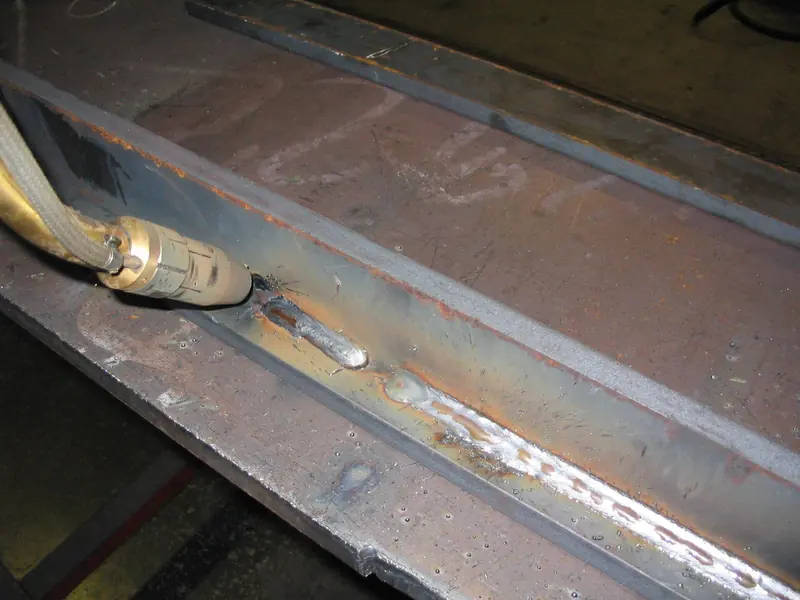
What a welder can usually repair on site
Cracked corner joints, broken hinge brackets, a bent bottom rail, worn hinge hardware and missing bracing are all realistic field repairs on pipe and tube gates. A welder can also add a diagonal brace or a gusset to stop a corner from flexing again. The gate, fence and railing page covers the usual repairs in more detail.
Some failures are better handled by replacement. A bottom rail rusted thin will burn through when welded, and a gate bent by a vehicle often costs more to straighten than to rebuild. When the post has heaved, the real job is digging and setting concrete, and a welder may bring a post-hole digger or send you to a fence contractor for that part.
Posts need time. The Natural Resources Conservation Service's fence construction specification says gateposts, corner posts and pull posts must be embedded, braced and trussed, that end panels are built at gates, and that stress must not be applied to posts set in concrete until at least 24 hours after a firm set. For you, that means a reset post usually rules out rehanging the gate the same day.
Photos that let a welder judge it by phone
Five pictures answer most of the questions a provider would otherwise ask on a second call.
- The whole gate, taken from the latch side, with both posts in the frame.
- The hinge, close up, showing the pin, the strap and where it joins the post.
- The break itself, with a tape measure or your hand beside it for scale.
- The ground in front of the gate, so ruts, mud or a slope show.
- The route in from the road, including any other gate, cattle guard or low branch.
Details to say out loud
Give the width of the opening, whether the gate swings or slides, whether it is pipe, tube or flat bar and roughly how thick, and what lives behind it. Say if an automatic operator is attached, since someone else usually handles that. Say what you have already tried, even if it failed, because a loose bolt that someone tightened last month often points at the real cause.
What access the welder needs
A welder arrives with a truck, a welding machine, cutting gear and grinders. Engine-driven machines make their own power, so you rarely need an outlet, but confirm that on the call. What the truck needs from you is a way to get close to the gate.
- A gate code, a key, or someone who will be there to open the front gate.
- Firm ground. After rain, a pasture entrance can stop a loaded truck, so say if it floods or stays boggy and offer a gravel or paved spot.
- Animals moved to another pen before work begins, with the gate area clear on both sides.
- A clear patch of ground. Mow or scrape dry grass back from the gate and read the site prep and fire safety guide, since a county burn ban can change how a provider sets up.
While you wait
Close the gap with a chain or cable and a padlock if that holds the animals in, and keep people from swinging a gate that is hanging by one hinge. Do not stand under it. If stock can get out, putting them in a smaller pen is a better stopgap than a patch that fails at night.
Independent welders set their own calendars, and this service cannot commit any of them to a day. The urgent and same-week repairs guide covers what to say so a provider can judge how soon a visit is realistic. Gates on the western edge of the area, in Fulshear and Brookshire, often involve longer drives, which the cost guide explains.
Common questions
Should I rehang the gate myself before the welder comes?
Only if it is light and you can do it safely with help. A gate that is forced back onto a loose hinge post can crack another weld. Photograph the problem first so the provider sees what failed.
What if the concrete around the gate post has heaved?
That is a post problem, not a gate problem. The post is reset in new concrete, and the gate stays off until the concrete has set. Ask the provider whether they reset posts or whether you need a fence contractor first.
Does a livestock gate need heavier steel than a house gate?
Often yes. Cattle lean and push on a gate all day, so providers who work around ranches usually talk about heavier pipe, extra bracing and sturdier latches. Say what is behind the gate when you describe the job.
Can a gate be welded while animals are in the same pen?
It is safer and faster to move them first. Sparks, noise and a stranger's truck upset stock, and a gate that is open for repair is an escape route.